The Year has begun well with 2026 seeing Strong Orders to Keep Momentum
High Peak Steels have seen the year kicked off with solid demand, with a notable influx of orders since the New Year. Customers are actively seeking market insights and confirming project pipelines, signalling optimism in key end-use sectors such as automotive and manufacturing.
According to recent industry commentary, the UK and EU steel markets continue to feel the effects of policy shifts and evolving demand patterns, with demand still under pressure but selective segments showing resilience.
Carbon Border Adjustment Mechanism (CBAM) Takes Effect
Liam, Sales Manager at High Peak Steels, highlighted CBAM as a major topic for customers, and this aligns with industry developments. The EU’s Carbon Border Adjustment Mechanism entered its definitive phase on 1 January 2026, requiring importers to register and purchase emissions certificates for high-carbon imports like steel.
This policy is designed to level the playing field by pricing carbon in imported steel — a challenge for producers in regions without strong carbon pricing. Analysts forecast upward pressure on steel prices in the UK and EU as a result of CBAM and related safeguards.
Steel prices in the EU and the UK will rise after new tariffs and the Cross-Border Carbon Adjustment Mechanism (CBAM) come into force. This is the forecast of British steel supplier All Steels, according to SteelOrbis.
In particular, the CBAM, which is set to come into force on January 1, 2026, could add between £30 and £130 per ton to the cost of UK imports, depending on origin and carbon intensity. More>>
Liam Wright - Sales Manager at High Peak Steels giving insight on the market forces driving trade for the UK and Globally
HOW DOES THE CBAM WORK?
Under the CBAM, EU importers are required to pay a carbon price on certain imported goods (from non-EU countries), equivalent to the price that EU producers pay under the EU Emissions Trading System (EU ETS). Importers must report the (direct and indirect) embedded greenhouse gas emissions on their imports, purchase corresponding CBAM certificates and surrender them to cover these emissions. The system aims to prevent “carbon leakage” (a situation where companies move their production outside the EU to avoid the costs associated with climate policies) and level the playing field More>>
Global Trade Tensions & Geopolitical Impact
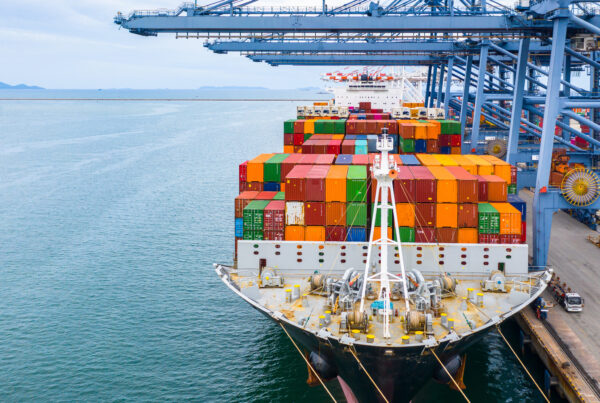
Liam referenced global conflicts and tariff issues affecting the market — and recent trade coverage confirms continued geopolitical drivers impacting steel supply chains. Tariffs, policy shifts, and tensions remain key volatility factors for commodity markets heading into 2026.
For example, global trade policy uncertainty — including tariffs and shifting environmental measures — is expected to challenge market stability and influence trade flows this year.
EU Tariffs on Chinese Steel & UK Implications
The potential for EU tariffs on Chinese steel is also top of mind this year — and industry reports show new tariff frameworks and quota tightening could push prices higher and shift trade patterns.
At the same time, UK government safeguards have been strengthened to protect domestic producers from cheap imported steel, tightening quotas and limiting import liberalisation to support local manufacturing.
How will this impact Purchasing?
- Price expectations Trade actions and CBAM compliance costs are widely expected to keep upward pressure on steel prices through 2026.
- Demand signals Continued positive order books suggest buyers are moving ahead with planned projects, even amid market uncertainty.
- Global factors Trade tensions and carbon pricing reforms will remain key external drivers shaping supply and pricing.
What This Means for Buyers in the UK Steel Market
Price expectations:
Trade actions combined with ongoing compliance costs from the UK’s upcoming Carbon Border Adjustment Mechanism (CBAM) and global carbon pricing reforms are widely expected to keep steel prices in the UK and Europe elevated through 2026 and into 2027, with some analysts projecting increases of £80–£200 per tonne on key products as firms factor in emissions costs.
UK price trend signals:
Producer price indices for basic iron and steel imported into the UK show price inflation remains significantly above pre‑pandemic levels, reflecting sustained cost pressures across the value chain.
Import volumes & trade balance:
In 2024 the UK imported nearly 7 million tonnes of iron and steel, while exports were around 2.9 million tonnes, creating a steel trade deficit of about £2.6 billion — underscoring strong reliance on overseas supply to meet domestic demand.
Moreover, finished steel imports jumped over 21% year‑on‑year in March 2025 to ~447 kt, with significant increases from EU suppliers and Asian producers.
Domestic production & demand:
UK crude steel production has been under pressure — with output around 4–5.6 Mt in recent years and declining relative to historic levels — while domestic demand is estimated at 9–11 million tonnes per year.
This gap between UK steel demand and domestic production continues to support import‑dependent supply chains. Keywords like UK steel demand 2025, UK steel import dependency and steel production UK reflect these dynamics.
Demand signals:
Despite headwinds in manufacturing orders (with UK industrial order books still below long‑term averages), continued project pipelines — especially in construction, automotive and renewable energy sectors — suggest buyers are pushing forward with planned infrastructure and fabrication projects, even amid market uncertainty.
Global factors:
External drivers — such as trade tensions, global steel overcapacity (estimated at hundreds of millions of tonnes more than global demand), and shifting carbon pricing regimes — will remain key influences on UK steel supply, price volatility, and buyer decision‑making over the next several years.
Team Growth at High Peak Steels

We welcome Max to the sales team, joining our professional sales advisors, Max will add support to customers enquiries throughout 2026 — reinforcing High Peak Steels’ commitment to service during a dynamic market phase.
So you can get to know Max, here’s a little about our latest addition to the sales team
EXPERIENCE – With a background in procurement and steel stock analysis Max was looking for the next stage in his career hoping to become part of a winning team, filled with experience and decades worth of industry knowledge.
INTERESTS – Outside of work I play football weekly, am an avid home cook (5 years as a chef) and on the weekends when I’m not out watching football, you’ll most likely find me gaming online. Although I don’t currently own any pets, I love animals and have always wanted a dog, specifically an English bulldog (one which can/can be taught to ride a skateboard).
CHOOSING A WINNING TEAM – The moment I became aware of the opportunity at High Peak Steels I knew I had to go for it; with my industry experience and local knowledge I feel the stars have really aligned for both me and the team here. It has been a great start and can only hope to continue in this light; everyone has been extremely helpful and most welcoming. I couldn’t be more grateful.
We prioritise customer service and lead times on a wide range of products meaning you’ll start your jobs on time every time. The scope for this has recently been enhanced with our 20,000-square-foot expansion of the warehouse facilities.
I’m looking forward to getting to know you all the year ahead.